Oasis-Office Plants
brings nature into your workspace with thoughtfully chosen, air-purifying greenery—like palms and other organic species—that filter toxins such as formaldehyde and benzene while boosting oxygen.
This biophilic design not only cleans the air but also enhances well-being and focus, creating a fresher, healthier, and more inspiring work environment.
Natural Air Filtration by plants
Synergy with Plants
Did you know? Plants breathe in rhythm with us.
We exhale carbon dioxide—plants breathe it in.
They release oxygen (and yes—fresh, clean air)—we breathe it in.
It’s a quiet, sacred exchange:
We give them breath. They give us life.
And in our offices, homes, and hearts—this simple harmony makes the air softer, clearer, and more alive.
More than decor, plants are partners.
Co-creators of comfort, calm, and connection.
Let’s honor that. And breathe deeper together.
#Synergy #NatureAtWork #IndoorPlants #AirPurifyingPlants #HolisticOasisOffice #BreatheEasyAir-purifying plants-purifying plants
Air is life.
Its quality is therefore important for our health, well-being and how we feel. This is about the outdoor air, but also the air inside.
After all, that is where we spend a large part of our lives.
At home, in the office, at work or at school.
Some benefits of rooms with living plants include higher humidity, more attractive workplace, more positive mood, better functioning and less absenteeism.
Harmful substances spoil the air we breathe. These substances are given off by furniture, clothes, carpets, paint and printers, for example, but also by people themselves.
We all know that plants produce oxygen. Plants are also capable of absorbing pollutants, scientific research shows. Only a select range has strong air-purifying properties. These are the plants from Air So Pure.
Holistic Oasis Office Transformation program selected the best company for our green office mission.
The plants from 'Air So Pure' company are selected for proven strong air-purifying properties. That's what makes their collection unique.
An air-purifying plant from Air So Pure neutralises harmful gases by absorbing and breaking them down.
makes the air healthier by effectively converting carbon dioxide into oxygen.
improves humidity through the regulatory evaporation process.
How do air-purifying plants work?
The cells of plants are little chemical factories where substances are converted into other substances. Substances are broken down and substances are rebuilt.
Air So Pure plants breathe through the leaf stomata. These are microscopic holes in the underside of the leaves. While breathing, they also absorb pollutants from the air. They then break these down inside the plant into nutrients that they use later.
Synergy.
Most plants also breathe differently, let's say: the opposite than we humans do.
They breathe in carbon dioxide and breathe out oxygen and hydrogen!
And we plants provide better indoor air to feel more comfortable in.
Research into air purification
Good ventilation and purification of air by plants make for a healthier living environment.
NASA research shows that some specific plants were able to convert CO2 into oxygen more effectively than other plants. Moreover, they greatly reduced the level of pollutants in the air. After these plants were in the testing room for several days, the test subjects' complaints disappeared on their own!
Since these tests, organisations such as Fytagoras and PPO (Praktijkonderzoek Plant & Omgeving, translated: Practical Plant & Environment Research) are now still doing research on this group of plants, which provide a healthy and sustainable environment.
The positive effects of plants have also been studied in companies. Some benefits of rooms with living plants include higher humidity, more attractive workplace, more positive mood, better functioning and less absenteeism.
The air-purifying effect of our Air So Pure plants has been scientifically tested by Phytagoras Science in the Netherlands.
How many air-purifying plants do you need in a room?
It is difficult to specify exactly how many plants you need in a room. It also depends on how many people are in the room, how many appliances are in the room, how often doors and windows open, etc. Basically, the more air-purifying plants, the better. A forest with 1 tree is not a forest either, so to green a space, you need enough plants.
However, estimates can be made for the number of plants needed. The more, the better. The stronger air-purifying the species, the better.
A rule of thumb might be: 350 grams of leaf mass per person of a reasonable to good air-purifying plant species. Depending on the species and thus much or less leaf.
Room surface area: 30m2
Number of plants:
- Small plants: 4-6 - pot diameter 13 cm
- Big plants: 2-3 - pot diameter 17 cm
Air quality is an important factor in our lives as humans breathe around 3000 gallons of air per day!
Generally, air includes nitrogen and oxygen, but with that also comes various particles and compounds that are mostly invisible to the naked eye— so we don’t know exactly everything we’re breathing at any given moment. Certain plants have been researched for their ability to filter harmful pollution. So by bringing a bit of the outside in, we may be able to help create a healthier living space.
Surprisingly - or not - air quality in homes, apartments, schools, and office buildings is often worse than outdoors. The EPA documented that indoor air can contain 2 to 5 times more pollution than outside air.
How does airpurifying by plants work?
Each indoor plant is an individual hard worker - they help filter the air through the process of photosynthesis. Using sunlight as a trigger for photosynthesis, they absorb carbon dioxide from the air and convert it into oxygen, which they then pump back out into the air. Aside from absorbing carbon dioxide, many can also absorb common household chemicals like formaldehyde and benzene. You might be surprised to know that household paints, fabrics, cosmetics, and other products emit low levels of chemicals into the air. Whilst these levels are tested and well within safe limits, houseplants can act as an air purifying mechanism for people with allergies or respiratory
A growing number of studies are being conducted on the effects that houseplants plants have on reducing pollutants and improving the purity of home and workplace air. The results are promising, although a resounding claim that plants sufficiently clean inside air is still inconclusive. Specifically, various studies have measured the degree to which certain plants can filter and reduce VOC’s (volatile organic compounds) such as formaldehyde, benzene, xylene, and trichloroethylene in a closed environment. Below, we’ll dive into the various benefits and purification ability of a few of our favorite air cleansing plants from studies such as NASA’s Clean Air Study.
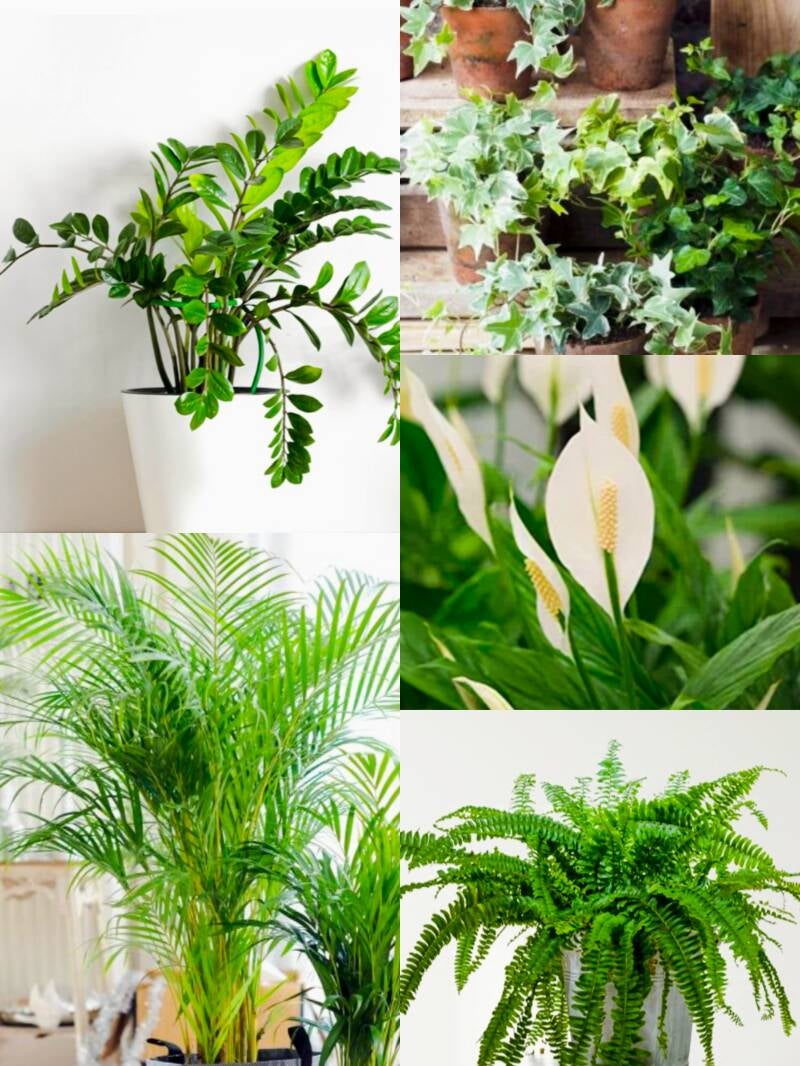
Here are plants that not only pleasant and beautifull but are very efficient and effective:
- Bamboo is renowned for its ability to filter and clean the air. Through a process called phytoremediation, bamboo plants absorb harmful chemicals and pollutants from the air and soil. Common indoor pollutants like formaldehyde, benzene, and trichloroethylene, often emitted from furniture, paints, and cleaning products, can be significantly reduced by bamboo. This plant acts as a living air purifier, creating a healthier indoor environment.
- English Ivy plant which certainly packs the most punch when it comes to eradicating unsafe substances from the air. It has been shown to filter out toxins such as: trichloroethylene, formaldehyde, benzene, and xylene. Not only a part of NASA’s Clean Air Study, but English Ivy was also one of the most effective plants for removing household airborne contaminants in a study conducted by the University of Georgia.
- Peace Lily (Spathiphyllum)
One of the most popular indoor plants, the Peace Lily has shown to neutralize trichloroethylene, ammonia, toluene, and benzene by breaking down the chemicals. In addition, this plant has a high transpiration rate which means it releases more moisture into the air.
The Peace Lily looks good in any room and is simple to maintain, making it a wonderful choice for a beginner. - Indoor palm trees are well known for their indoor air purifying ability. They are able to absorb harmful substances and turn them into oxygen. Studies have shown that indoor palms help remove substances such as formaldehyde, benzen and trichloroethylene from the air.
The entire palm family is well known for its air purifying qualities, and a particular favourite is the Parlour Palm variety. First popularised in the Victorian era it remains a firm favourite for removing formaldehyde, benzene and carbon monoxide from the air - Areca Palm – Ranked by NASA as the #1 plant air purifier, the Areca Palm is an absolute must-have plant. Named as “the most efficient humidifier” by Meta Efficient, this incredible palm tree works at continuously removing chemical toxins from the air.
- Zanzibar Gem (Zamioculcas Zamiifolia)
With its fabulously exotic name, this plant is a champion at removing toxins like benzene, toluene and xylene from the air. If you’re looking for a stylish plant that also helps clean your indoor air, then this one is for you. - Boston Fern (Nephrolepis Exaltata)
This fern is a winning bathroom plant due to its preference for higher humidity levels and indirect sunlight. They have been said to remove more formaldehyde from the air than any other plant and they can also remove pollutants from car exhaust fumes
